Why Upper-Middle Class Consumer Spending Creates Attractive Investment Opportunities
by
Investment Division

Last updated:
When private equity firms evaluate a consumer business, the key question often goes beyond whether the underlying market is simply growing. More salient questions include whether the business can benefit from recurring demand, whether it possesses a resilient customer base, and whether it presents opportunities for operational improvements or further scaling. Ultimately, investment outcomes often depend less on headline growth than on the quality, source, and durability of underlying cash flows.
These considerations were central to Centroid’s investment in 2022 into Concert Golf Partners, a U.S. operator of private membership golf clubs. On the surface, this appeared to be yet another acquisition of a standard golf club operator. Our core investment thesis ran deeper, however, and was grounded in our assessment of the resilience of experiential spending among affluent consumers, the recurring nature of the company’s membership fee structure, and the significant scalability of the platform’s business model.
The transaction also marked the first time a Korean GP consummated a cross-border buyout transaction alongside a global private equity firm. Centroid partnered with Clearlake Capital, a U.S. investment firm founded in 2006 that focuses on the technology, industrials, and consumer sectors, with assets under management of approximately US$185 billion. Through the acquisition, Centroid became the second-largest shareholder of Concert Golf Partners, eventually exiting the investment in December 2025. Over the three-year holding period, the investment generated a Gross IRR of 19.9% and a Gross MOIC of 1.8x.
This article provides a case study of how Centroid applies existing industry expertise to evaluate new business models: how the firm constructed the rationale behind its investment conviction, how it scrutinized the supporting evidence, and how the investment helped further shape its approach to consumer investing.
1. Concert Golf Partners and the Private Membership Golf Club Market
a. Beyond Golf Courses: A Membership-Based Lifestyle Platform
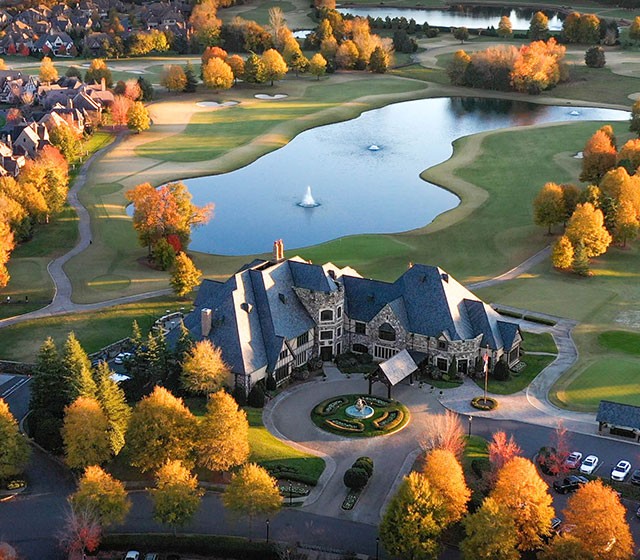
Founded in the early 2010s and headquartered in Florida, Concert Golf Partners owns and operates private membership golf clubs across the United States. The company selectively acquires premium clubs with a view to actively enhancing their long-term value through facility upgrades, improved member experiences, more sophisticated pricing strategies, and greater operating efficiency.
Concert Golf Partners is more than a golf course operator. Private clubs are ultimately membership-based service businesses providing affluent consumers with an integrated service offering that spans leisure, family activities, community, networking, dining, and events. What members are really paying for, therefore, is more than just a golf outing: a consistent standard of service, a sense of community, and a higher-quality overall leisure experience.
b. Recurring Revenue and Pricing Power Enhance Cash Flow Quality
These characteristics are reflected directly in the company’s revenue model. Private clubs typically generate revenue from membership sources such as initiation fees and annual dues, as well as from food and beverage, events, and ancillary amenities including tennis, fitness, and swimming facilities. Membership-related fees accounted for more than 50% of Concert Golf’s overall revenue, meaning the company enjoyed steady and predictable cash flow from recurring sources, anchored in a loyal member base as opposed to one-off visitor demand. The business also had considerable room to grow revenue through more diversified pricing strategies and an expansion of ancillary services.
c. Resilient Demand and Market Fragmentation Enable Platform Expansion
Demand for private membership clubs is underpinned by structural spending trends among affluent consumers. As disposable income increases, consumers tend to allocate more towards experiential spending related to health, leisure, family, social engagement, and wellness. Rising interest in outdoor activities following the Covid-19 pandemic also served as a significant tailwind for golf and private clubs.
On the other hand, the private club market remains highly fragmented, with most clubs operating under individual ownership at the local level. This fragmentation creates opportunities to strategically acquire clubs with established member bases and integrate them into a professionally managed platform. Concert Golf Partners capitalized on this combination of resilient demand and fragmented supply through the selective acquisition and integration of high-quality clubs.

2. Investment Highlights and Validation
a. Applying Prior Golf-Sector Experience to Evaluate a New Business Model
Initially, Concert Golf Partners represented a relatively new business model for Centroid. In fact, the concept of a private club platform was effectively a new asset class in the Korean market, and investors would require a stronger rationale beyond industry growth trends. As such, validating the durability of demand, the quality of revenue, and the scalability of the operating model was essential.
Centroid therefore chose to take a deeper dive into the customer base and revenue model rather than simply relying on broader industry trends. The central questions were clear: Was the member base sufficiently resilient? Did the company have a demonstrated ability to pass through price increases in initiation fees and annual dues? Were member retention rates and usage patterns at existing clubs stable? Could the same operating model be applied to newly acquired clubs to improve performance? And, most importantly, could those improvements be replicated consistently across the platform?
b. Recurring Demand Is Rooted in the Lifestyles of Affluent Consumers
Through its due diligence process, Centroid analyzed Concert Golf Partners’ revenue mix and the underlying drivers of each revenue stream. The key conclusion was that the company’s revenue streams were supported by the lifestyle demands of affluent members. Members were paying not only for access to golf facilities, but for an ongoing leisure and social experience integrated into their daily lives. Catering to this broader lifestyle-based demand translated into greater resilience across economic cycles and low member churn.
c. A Robust Acquisition Pipeline and Operating Capabilities Supporting Bolt-On Growth
Concert Golf Partners’ core growth strategy was driven by bolt-on acquisitions: the continued acquisition and integration of high-quality private clubs into its existing platform. Another critical aspect to validate, therefore, was the company’s track record in improving the financial performance of existing clubs, as well as the speed at which such improvements were implemented. Centroid was able to confirm a steady pipeline of willing sellers motivated by various needs such as generational transitions, the burden of facility reinvestment, and liquidity requirements. On this basis, Centroid concluded that the platform would be able to continue sourcing attractive acquisition opportunities at reasonable valuations and terms.
Furthermore, in the private membership golf club market, simply securing a well-located asset is not sufficient on its own. Profitability depends on disciplined operational excellence across member experience, facility investment, pricing, food and beverage, events, and workforce management. Centroid accordingly sought to confirm that Concert Golf Partners had the systems, management infrastructure, and operating expertise required to replicate these improvements across its portfolio.
d. Global Partnership Mitigating Local Execution Risk
Clearlake’s capabilities were another important part of Centroid’s investment conviction. The global firm’s operationally focused investment approach served as a strong source of capital, expertise, and resources required to support Concert Golf’s core growth strategies. By partnering with Clearlake, Centroid was able to mitigate the execution risk associated with an unfamiliar asset class while further developing its own capabilities in global consumer and services investing.
e. From 23 to 39 Clubs: The Investment Thesis in Action
Following Centroid’s investment, Concert Golf Partners’ bolt-on strategy yielded significant platform expansion, supported by a steady pipeline of acquisition opportunities. The company’s initial portfolio of 23 clubs grew to 39 by the time of exit.
This growth represented more than an increase in club count. It demonstrated that Concert Golf Partners could continue to selectively acquire high-quality clubs in a fragmented market and consistently apply its proven operating model across the broader platform.
Targeted capital investment supported facility upgrades and membership growth, and the company’s pricing power enabled increases in initiation fees and membership dues. By expanding the platform while improving performance at individual clubs, the investment encapsulated the value-creation potential of a scalable experiential services business.
f. Beyond Golf: Investing in a Recurring-Revenue Experiential Platform
The investment validated Centroid’s initial thesis. The appeal had little to do with golf itself. It lay in a scalable experiential services platform supported by recurring membership revenue, resilient consumer demand, and repeatable operational improvement.

3. What Should Investors Look for in Experiential Businesses Serving Affluent Consumers?
The Concert Golf Partners investment provides several insights that have shaped Centroid’s approach to consumer investing.
First, experiential businesses serving affluent consumers may appear structurally attractive as a theme, but not every such business represents a compelling investment.
Affluent consumers are increasingly shifting spending from products toward experiences – healthcare, leisure, family activities, social engagement, and personalized services. Where customers are less price-sensitive and satisfaction is high, these businesses can generate recurring, long-term customer engagement. Just as important as the underlying service itself, however, is the associated business model.
Businesses with strong customer retention, pricing power, differentiated services, and a high proportion of recurring revenue are more likely to offer an attractive investment opportunity. By contrast, businesses that are highly trend-reliant, easy to replicate, or characterized by low customer loyalty may carry long-term risks even if they are currently thriving within a growing market segment.
Second, experiential businesses with clear opportunities for operational improvement and platform consolidation are particularly well suited to private equity ownership.
A high-quality asset alone rarely generates excess returns. True value creation often requires the ability to systematically improve customer experiences, pricing, cost structures, and ancillary revenue sources, as well as to manage capital investment and expansion strategies. The combination of operational and capital deployment expertise is particularly powerful in fragmented markets, where opportunities can arise to selectively acquire high-potential assets and apply proven operating practices.
Concert Golf Partners’ expansion from 23 to 39 clubs, together with membership growth and effective pricing increases at individual clubs, demonstrated how this value-creation model could be applied successfully to the private membership golf club market.
Third, durable demand and high-quality cash flow ultimately matter more than brands or trends.
In consumer investing, market size alone does not determine investment attractiveness. It is important to consider whether customers are engaging with the business consistently, whether the company possesses meaningful pricing power, whether there remain opportunities for incremental operational improvements, and whether the business model can scale into a broader platform. A successful investment strategy, therefore, is less about predicting the next big trend than about identifying a durable and repeatable earnings model.
Conclusion
The Concert Golf Partners investment illustrates how Centroid identified experiential spending by affluent consumers as an attractive investment theme. What might have seemed like a simple golf club acquisition was, in fact, an investment into a scalable experiential services platform supported by recurring membership revenue, durable lifestyle-driven demand, operational improvement opportunities, and platform expansion potential.
Centroid’s partnership with a leading global private equity firm helped mitigate execution risk, while the platform’s growth from 23 clubs at entry to 39 at exit validated the underlying thesis. The case demonstrated that an unfamiliar business model can represent a compelling investment opportunity when supported by recurring demand, visible cash flow, and a repeatable operating model.
Experiential spending by affluent consumers is expected to evolve further across areas such as senior living and lifestyle services, private membership clubs, wellness, and sports and leisure infrastructure. Building on the insights and experience gained from the Concert Golf Partners investment, Centroid will continue to evaluate opportunities in these sectors.
Ultimately, an industry’s attractiveness hinges less on its surface-level growth narrative than on whether it offers durable customer demand, pricing power, opportunities for operational improvement, and the potential for scalable platform growth. Concert Golf Partners provided a clear example of how these characteristics can translate into realized investment performance.
This article has been prepared for informational purposes only and does not constitute an offer, solicitation, or recommendation with respect to any investment product. Past investment performance described herein is not indicative of, and does not guarantee, future returns and should not be relied upon as a basis for any investment decision.
Insights

